Learn more about Dignams Creek Landcare Group and the Feed Diggies Group
About Dignams Creek Community Group (DCCG)
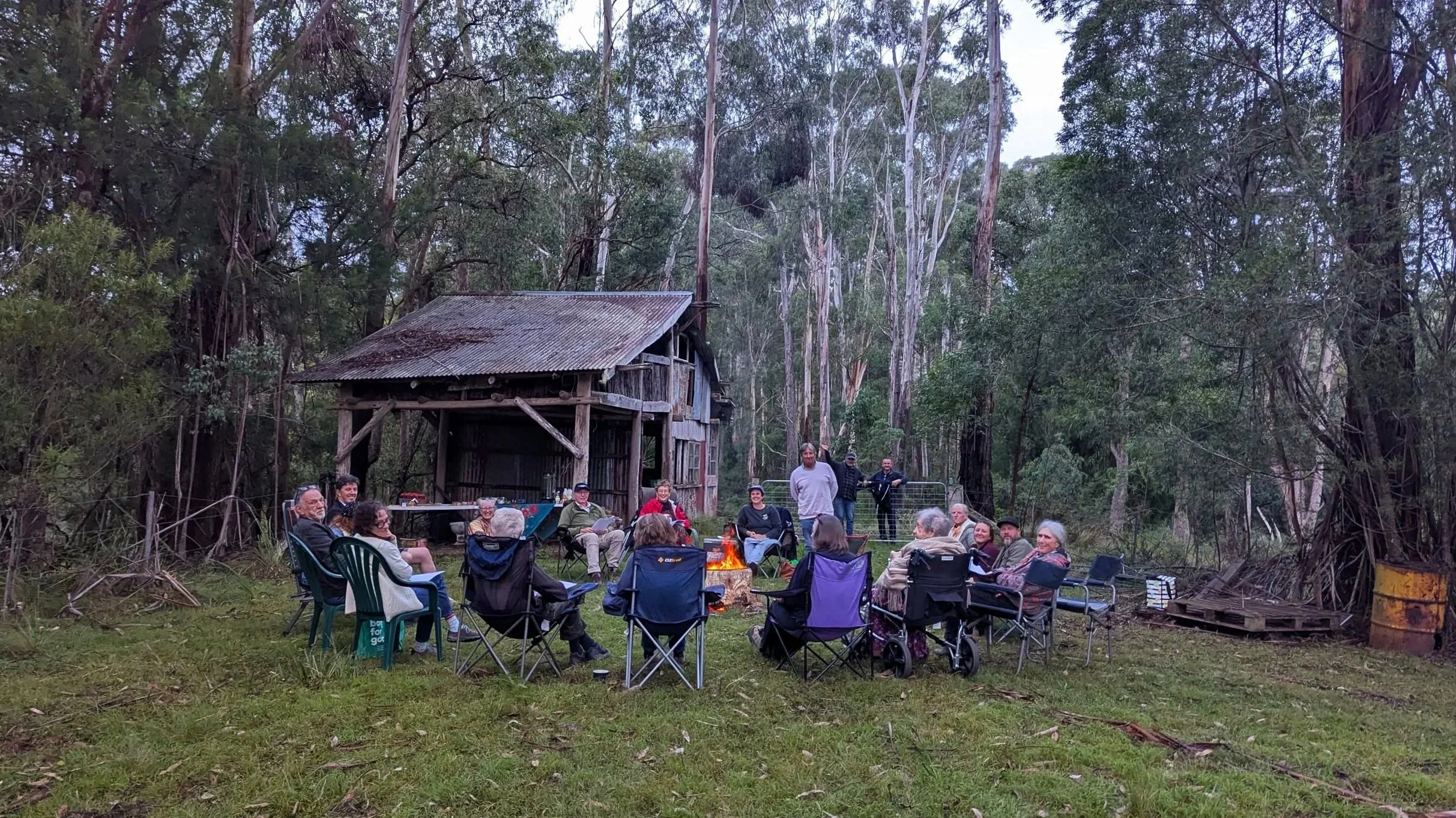
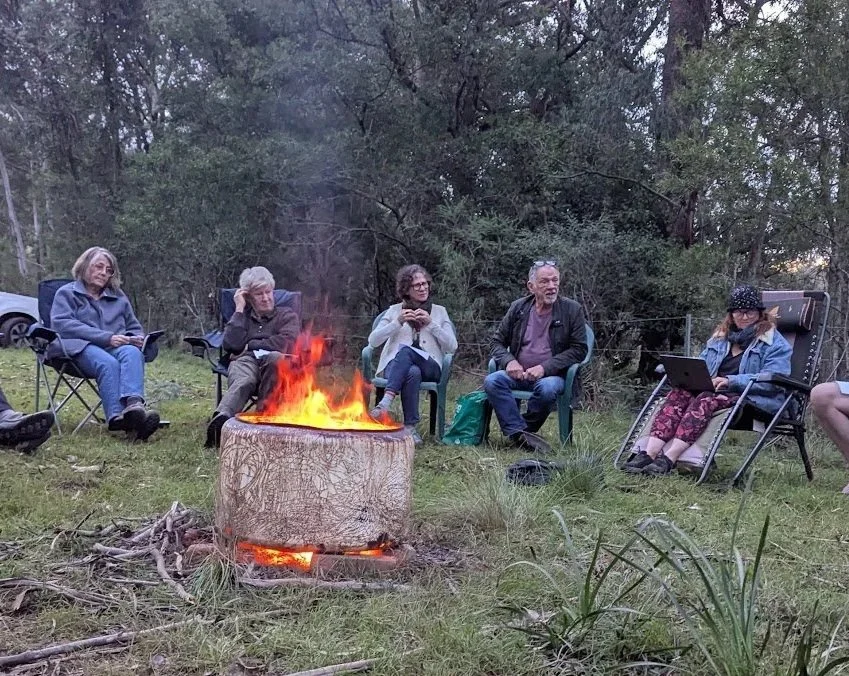
The Dignams Creek Community Group (DCCG) formed in 1995 and has a strong history of community engagement and fun.
The DCCG played an active role in advocating for the establishment of Kooraban National Park. As a community we have participated in koala surveys, bush picnics, garage sales and markets, the finding of rare plants (by Vernon Pretty). We have hosted guest speakers on all kinds of issues and fundraisers that built our fire shed and support the eradication of fruit fly in our valley.
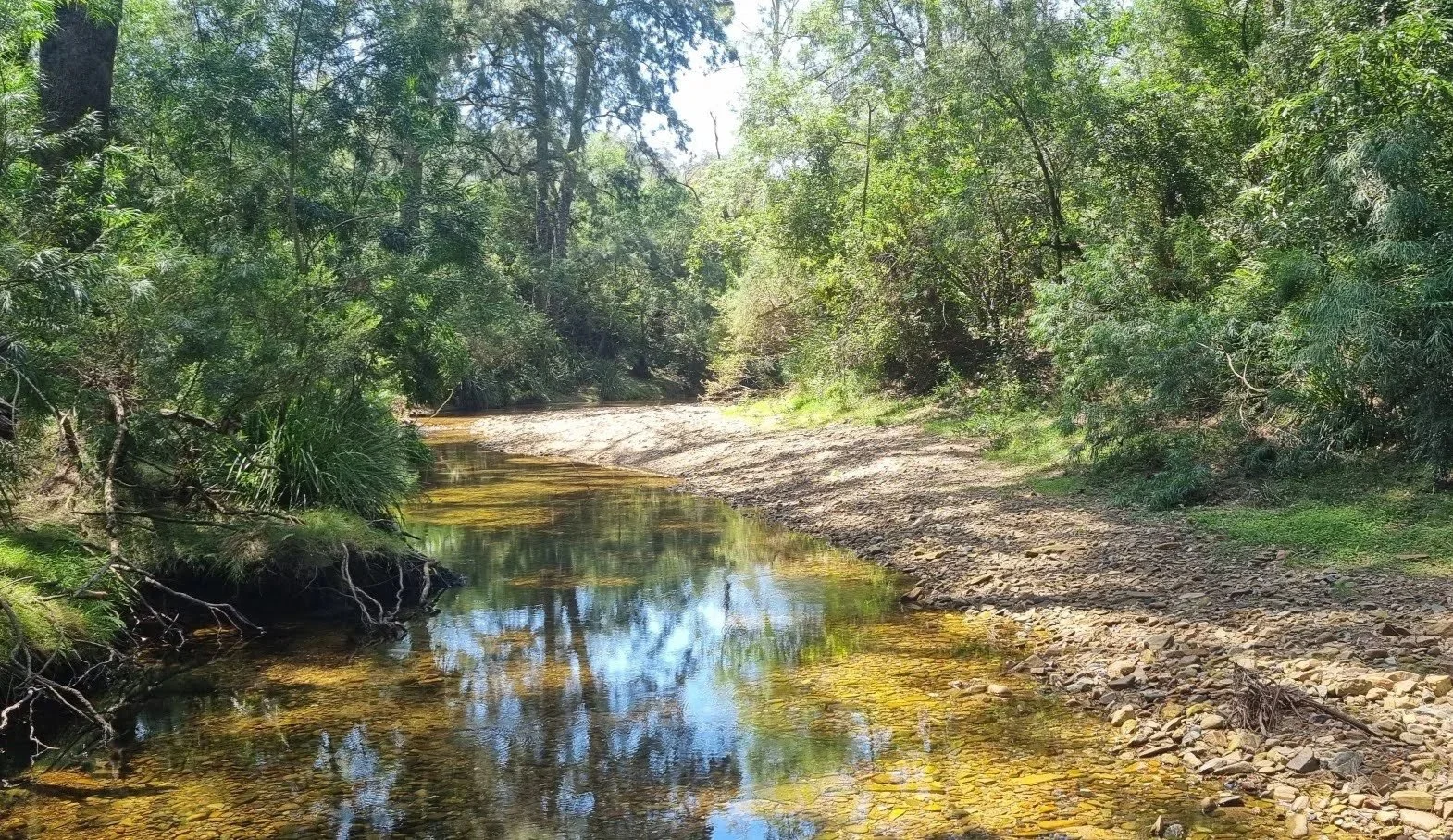
Today the community is dispersed along the Dignams Creek valley, which extends from the southern slopes of Gulaga towards Wallaga Lake. It is a rural locality rather than a conventional village, with Dignams Creek forming part of the boundary between the Bega Valley and Eurobodalla shires.European activity in Dignams Creek began by the mid-nineteenth century. We know that the creek was named Dignams Creek by 1852 when alluvial gold was discovered in the creek. This led to mining commencing around 1860.
After Robertson's Crown Lands Acts of 1861 opened the district to selection, more permanent agricultural settlement followed from about 1870, when free selectors began establishing farms along the creek. At this time, Dignams Creek’s economy was built around gold mining, farming (especially dairying, together with crops and livestock) and timber.
By 1871 several selectors were already living in the valley, and as the farming population grew a school (1877) and church (1878) were opened. The school moved from the northern side of the creek to the southern side near Dignams Creek Road in 1916 and closed in 1942. The church closed in 1968 and is now a home. A memorial hall commemorating the First World War served as a dance hall and polling booth stood on the north side of the creek until it was dismantled in 1978. After the First World War, a Memorial Avenue was established near the junction of Dignams Creek Road and the main road, with a pine tree planted for each local serviceman. These trees were killed in the fires in 2020.
Dairying and timber remained the main industries until about 1950, after which a number of farms diversified into beans and seed growing — Dignams Creek had its own seed producers' group between 1950 and 1957, the district being relatively disease-free and good for seed. Dairying declined further with the 1965 - 1969 drought and the shift to beef production. From the 1980s, a number of farms were subdivided and agriculture declined. Forestry finished in 2001 when the Kooraban National Park was created.
Because this was the major north-south land route in the region, the early ford where the old bridge is located was replaced around 1890 by a McDonald truss timber bridge. This was washed away in the floods of January–February 1934 and a reinforced concrete beam bridge went up in 1935. This was built before the Main Roads program reached the area, effectively fixed the alignment of the Princes Highway here for the next eighty years. When the Main Roads work reached the area, the Main Roads Board used Dignams Creek as an administrative centre for road widening and realignment works, and at one stage about half the children at the local school were from road-worker families.
An older road to Bermagui also ran down through the travelling stock reserve at the bridge. This was a major route for droving pigs from Eurobodalla to the port at Bermagui and had fallen out of use by the early twentieth century.
The narrow bridge and tight curves gave the section a bad crash record. A preferred corridor was announced in 2010 at an estimated $85 million, then revisited as costs rose. Major work on the eventual $45 million upgrade began in April 2017, traffic moved onto the new alignment in December 2018, and the project was finished in 2019. The old highway and 1935 bridge now sit beside it, bypassed.
Today, traces of this history remain in the old highway and 1935 bridge, former school and church sites, old road alignments, farm remains and the shape of the creek valley itself.
History
Dignams Creek lies on the NSW Far South Coast, about 7 km north of the town of Cobargo
Dignams Creek’s traditional owners are the Yuin people, or more specifically the Walbunja tribe, which for thousands of generations have cared for and maintained deep cultural, spiritual and practical connections with the creeks, forests, mountains and coast of this country. Gulaga itself has a particularly strong association with Yuin women as it is regarded as a sacred women's place and is associated with birthing and women's cultural knowledge.
Landcare
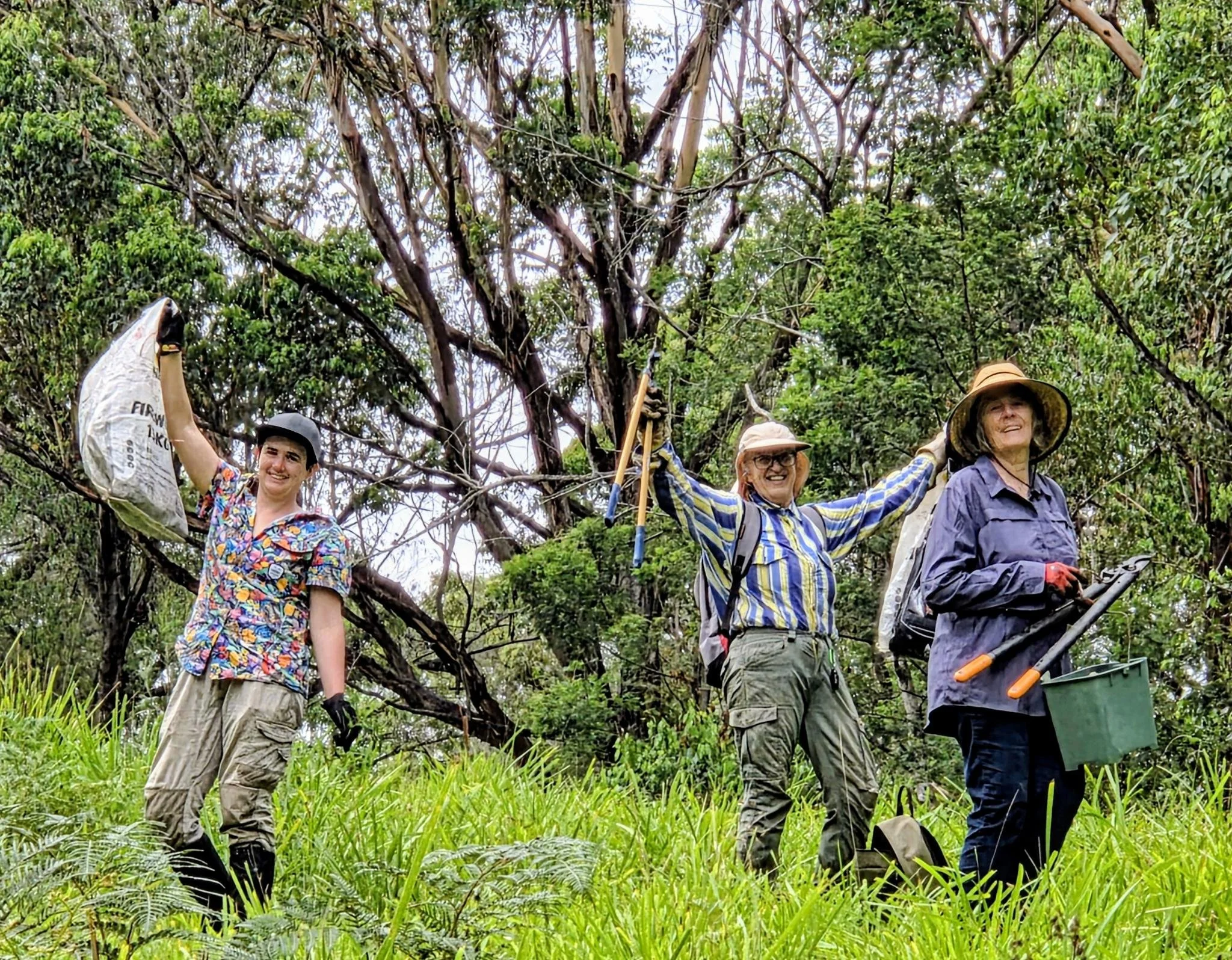
Though dormant for some years, like seeds waiting for rain, our Landcare group is up and running again. We decided to re-sprout in June 2022, and made it a sub-Committee of the Dignams Creek Community Group at the next AGM. Dignams Creek is one of 22 volunteer groups operating in the Bega Valley under the umbrella of the Far South Coast Landcare Association. Landcare builds on local knowledge and helps communities find solutions to environmental problems. Dignams Creek has an amazing diversity of flora and fauna to be protected, and we are currently focused on eradicating wild tobacco.
To join, contact s.gaunt@culturalchameleon.com.au
Feed Diggies
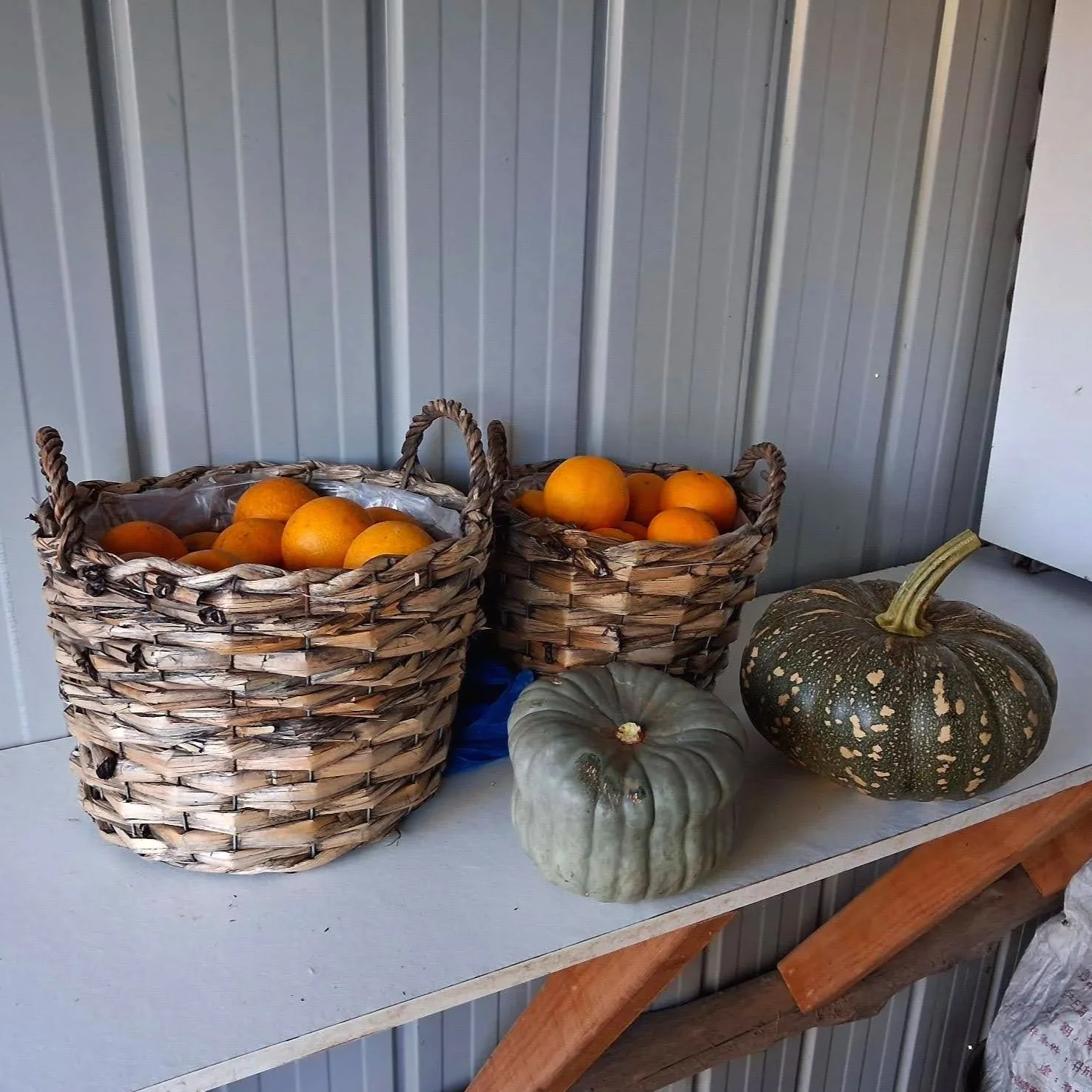
The "Feed Diggies" group began in 2022 and became a sub-Committee of the DCCG at the 2023 AGM. The goal of the group is to share skills, tools and time to increase the productivity of our gardens and to find a way to swap and share veggies, eggs, bread, preserves, seedlings, or help each other with fencing or building chook yards. At our first gathering we realised that among the group, we had about 68 hours of labour per month, a giant list of skills in all kinds of food growing and animal husbandry, and a very generous combined tool shed, including 4 tractors! We decided to do a monthly working bee at someone's place, and to share a meal afterwards, bringing anything in excess for swapping and sharing.
If you are interested in getting involved, email flickruby@gmail.com